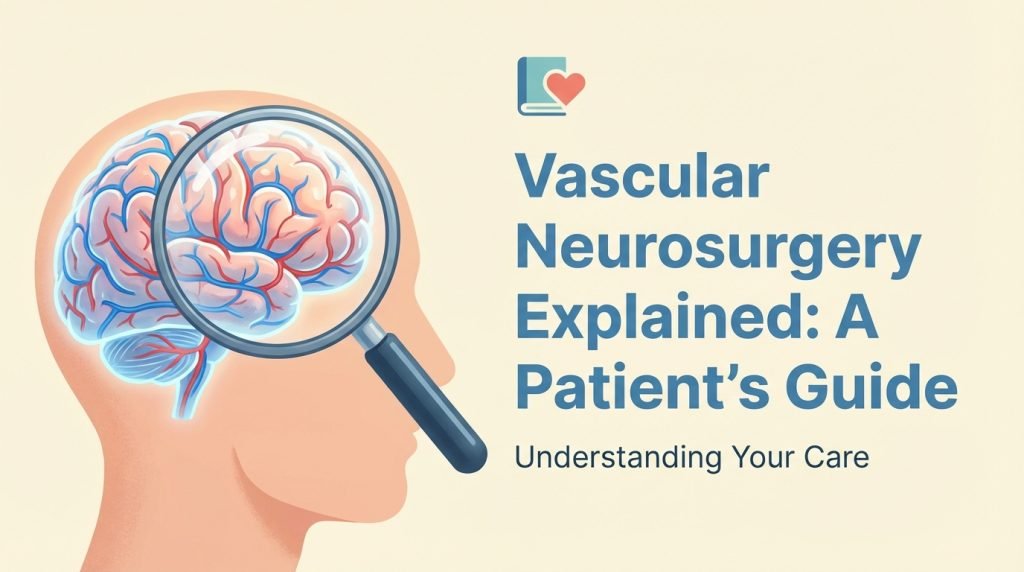
Vascular Neurosurgery Explained: A Complete Patient’s Guide
Receiving a diagnosis related to the blood vessels in your brain or spine can be overwhelming. Terms like “aneurysm,” “malformation,” or “stenosis” often sound frightening. However, vascular neurosurgery—also known as cerebrovascular surgery—has evolved into one of the most precise and successful fields in modern medicine.
This guide aims to demystify the specialty, explain the conditions treated, and outline the advanced surgical options available today to help you or your loved one navigate this journey with confidence.
What is Vascular Neurosurgery?
Vascular neurosurgery is a specialized subfield of neurosurgery focused on treating disorders of the blood vessels (arteries and veins) that supply the brain and spinal cord. Think of these surgeons as the “master plumbers” of the central nervous system. They ensure that blood flows correctly—neither leaking out where it shouldn’t (hemorrhage) nor getting blocked (ischemia).
Because the brain is incredibly sensitive to changes in blood flow, these surgeons undergo years of rigorous fellowship training beyond standard neurosurgery to master delicate micro-surgical and minimally invasive techniques.
Common Conditions Treated by Vascular Neurosurgeons
Vascular neurosurgeons manage a wide spectrum of “cerebrovascular” (brain-vessel) disorders. Understanding your specific condition is the first step toward treatment.
1. Brain Aneurysms
A brain aneurysm is a weak or thin spot on an artery wall that balloons out and fills with blood. The primary danger is that the “balloon” can leak or rupture, causing a life-threatening stroke called a subarachnoid hemorrhage.
2. Arteriovenous Malformations (AVMs)
An AVM is an abnormal “tangle” of blood vessels where arteries connect directly to veins without the normal capillary bed in between. This disrupts blood flow and puts high pressure on the veins, potentially leading to bleeding or seizures.
3. Carotid Artery Disease
The carotid arteries in your neck are the main highways for blood to the brain. Over time, plaque can build up (Carotid Stenosis), narrowing the path and significantly increasing the risk of a Stroke or Transient Ischemic Attack (TIA).
4. Cavernous Malformations
These are small “mulberry-shaped” clusters of abnormal, thin-walled capillaries. Unlike AVMs, blood flows through them slowly, but they can still leak and cause neurological symptoms depending on their location in the brain.
5. Moyamoya Disease
A rare condition where the main arteries to the brain become narrowed, causing the body to grow a “puff of smoke” (moyamoya) of tiny, fragile collateral vessels to compensate.
How Are Vascular Issues Diagnosed?
Before a treatment plan is created, your surgical team will use advanced diagnostic imaging to “map” your brain’s blood vessels.
- CT Angiography (CTA): A fast scan using dye to create 3D images of the blood vessels.
- MR Angiography (MRA): Uses magnetic fields to visualize blood flow without the radiation of a CT.
- Digital Subtraction Angiography (DSA): This is the “Gold Standard.” A catheter is threaded from the groin or wrist to the brain, and dye is injected. It provides the most detailed, real-time “movie” of how blood is moving through your vessels.
Treatment Options: Open Surgery vs. Endovascular Surgery
One of the most important aspects of modern vascular neurosurgery is the “dual-trained” approach. Many modern neurosurgeons are experts in both Open Surgery and Endovascular Surgery.
Open Vascular Surgery (Microsurgery)
This is the traditional approach, involving a craniotomy (creating a small window in the skull).
- Surgical Clipping: For aneurysms, the surgeon places a tiny metal clip across the neck of the aneurysm to stop blood from entering it.
- Resection: For AVMs, the surgeon carefully untangles and removes the abnormal vessels.
- Pros: Highly durable; often considered a permanent “cure” for many lesions.
Endovascular Surgery (Minimally Invasive)
This approach is performed from inside the blood vessel. The surgeon inserts a catheter (usually through the femoral artery in the leg) and navigates it up to the brain using X-ray guidance.
- Endovascular Coiling: Filling an aneurysm with soft platinum coils to trigger clotting and seal it off.
- Stenting: Placing a mesh tube to hold an artery open.
- Embolization: Using a “glue” or liquid embolic agent to plug up an AVM or fistula.
- Pros: No large incision, shorter hospital stay, and faster recovery time.
What to Expect: The Patient Journey
Understanding the timeline of care can help reduce anxiety for patients and their families.
1. Pre-Operative Preparation
You will likely meet with a multidisciplinary team, including the neurosurgeon, an anesthesiologist, and potentially a neurologist. You’ll be advised on medications (especially blood thinners) and undergo “baseline” neurological testing.
2. The Day of Surgery
- Duration: Procedures can last anywhere from 2 to 6 hours, depending on complexity.
- Anesthesia: Almost all vascular neurosurgeries are performed under general anesthesia.
3. The Neuro-ICU Stay
After surgery, patients are typically monitored in a Neuro-Intensive Care Unit (Neuro-ICU). The staff here are specialists in monitoring brain function. They will check your pupil response, speech, and motor strength every hour.
4. Recovery at Home
- Endovascular patients often go home within 24–48 hours.
- Open surgery patients may stay 3–7 days.
- Restrictions: You will likely be told to avoid heavy lifting and strenuous exercise for several weeks while the blood vessels or the incision site heal.
Risks and Safety: What You Should Know
No surgery is without risk, particularly when the brain is involved. Potential complications include:
- Vasospasm: A condition where brain arteries “cringe” or narrow after surgery; this is closely monitored and treated in the ICU.
- Stroke: Though the surgery aims to prevent stroke, the manipulation of vessels carries a small inherent risk.
- Infection or Bleeding: Standard risks for any surgical procedure.
Important Note: Your surgeon chooses a treatment plan only when the risk of not treating the condition (the risk of a future rupture or major stroke) is higher than the risk of the surgery itself.
The Future: Robotics and Artificial Intelligence
Vascular neurosurgery is at the cutting edge of medical technology. Two major trends are shaping the future:
- Robotic-Assisted Endovascular Surgery: This allows for sub-millimeter precision when navigating catheters through the brain’s “tight corners.”
- AI-Powered Risk Prediction: Advanced software can now analyze the shape and blood-flow patterns of an aneurysm to predict its likelihood of rupturing, helping surgeons decide exactly when to intervene.
Questions to Ask Your Vascular Neurosurgeon
When you meet with your specialist, consider asking the following:
- Is my condition stable, or does it require urgent intervention?
- Am I a candidate for endovascular coiling, or is surgical clipping a better long-term option for me?
- How many of these specific procedures do you perform each year?
- What is the specific goal of this surgery (e.g., preventing a bleed vs. relieving symptoms)?
- What does your post-operative follow-up schedule look like?

