
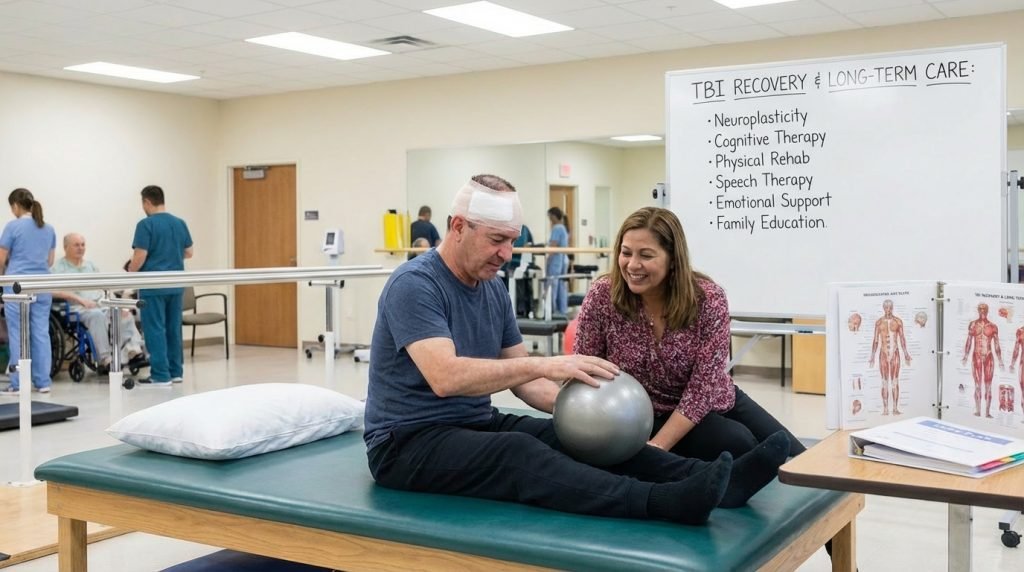
Traumatic Brain Injury (TBI): Recovery and Long-Term Care
A Traumatic Brain Injury (TBI) is more than just a medical event; for many, it is the start of a lifelong journey. Whether caused by a fall, a car accident, or a sports injury, a TBI disrupts the normal function of the brain. While the initial medical intervention is focused on saving life, the subsequent years are focused on reclaiming life.
Recovery from a brain injury is rarely a straight line. It is a non-linear process involving physical healing, cognitive retraining, and emotional adjustment. This guide explores the stages of recovery, the pillars of rehabilitation, and the strategies for managing long-term care.
1. Understanding the Severity of TBI
Not all brain injuries are the same. The path to recovery depends heavily on the initial severity of the injury, typically categorized into three levels:
- Mild TBI (Concussion): While labeled “mild,” the symptoms can be persistent. Most people recover within weeks, but some develop Post-Concussion Syndrome (PCS), where symptoms last for months.
- Moderate TBI: Often involves a loss of consciousness from 30 minutes to 24 hours. Survivors usually require intensive rehabilitation to regain daily functions.
- Severe TBI: Defined by a loss of consciousness for more than 24 hours. These injuries often result in permanent physical or cognitive changes and require long-term, specialized care.
2. The Stages of TBI Recovery: The Rancho Los Amigos Scale
Medical professionals often use the Rancho Los Amigos Scale to track a survivor’s progress. Understanding these stages helps families manage expectations:
- Stages I–III (Early Recovery): The patient is often in a coma or a vegetative state, showing little to no response to stimuli.
- Stages IV–VI (Confusion and Agitation): As the patient “wakes up,” they may be highly confused, aggressive, or agitated. This is a difficult but normal part of the brain’s healing process.
- Stages VII–VIII (Automatic and Purposeful): The patient can perform daily routines but still struggles with judgment, abstract thinking, and social interactions.
- Stages IX–X (Modified Independent): The survivor can handle most tasks but may need compensatory strategies (like lists or reminders) to function at their best.
3. The Pillars of TBI Rehabilitation
Rehabilitation is the “work” phase of recovery. A multidisciplinary team works together to stimulate neuroplasticity—the brain’s ability to reroute neural pathways around damaged areas.
Physical Therapy (PT)
Focuses on restoring mobility, balance, and coordination. PT helps survivors relearn how to walk, improve muscle strength, and manage “spasticity” (stiff or rigid muscles).
Occupational Therapy (OT)
OT is about Activities of Daily Living (ADLs). Therapists help patients relearn how to dress, eat, bathe, and eventually use a computer or return to work.
Speech and Language Pathology (SLP)
TBI often affects the ability to swallow (dysphagia) and communicate. SLPs work on speech clarity and, more importantly, cognitive communication—the ability to follow conversations and process information.
Cognitive Rehabilitation Therapy (CRT)
This specialized therapy targets memory, attention, and executive function. Survivors learn to use external aids (planners, apps) to compensate for cognitive gaps.
4. Long-Term Challenges: Beyond the Hospital
As the initial physical wounds heal, the “hidden” symptoms of TBI often emerge. Long-term care must address these three critical areas:
Cognitive and Executive Dysfunction
Survivors may struggle with:
- Short-term memory loss.
- Impulsivity and poor judgment.
- Executive dysfunction: Difficulty planning, organizing, or starting tasks.
Emotional and Behavioral Changes
The brain controls our personality. Damage to the frontal lobe can lead to:
- Emotional Lability: Sudden, uncontrollable outbursts of crying or laughing.
- Depression and Anxiety: Often caused by both the physical injury and the grief of losing one’s “former self.”
- Irritability and Anger: Reduced “patience” for sensory overload (loud noises or bright lights).
Physical Complications
Long-term physical effects can include:
- Chronic Headaches/Migraines.
- Sleep Disorders: Insomnia or excessive daytime sleepiness.
- Seizures: Post-traumatic epilepsy can develop years after the injury.
5. Strategies for Long-Term Care and Support
Long-term care is about creating a “New Normal” that prioritizes safety, mental health, and incremental progress.
1. Environmental Modifications
Minimize “brain fatigue” by creating a structured environment.
- Use dimmable lights to reduce sensory overload.
- Keep a “command center” with a large calendar and daily schedule.
- Minimize clutter to reduce visual distractions.
2. The Role of the Caregiver
Caregivers are the backbone of TBI recovery, but the role is exhausting. Caregiver Burnout is a significant risk. Families should:
- Seek Respite Care to take breaks.
- Join TBI support groups to connect with others who understand the unique challenges.
- Focus on “small wins”—celebrating a successful trip to the grocery store or an hour of sustained focus.
3. Vocational Rehabilitation
For many survivors, returning to work is a top priority. Vocational counselors help transition survivors back into the workforce with “reasonable accommodations,” such as shorter shifts or written instructions.
6. Neuroplasticity: The Science of Hope
Perhaps the most important concept for TBI survivors is neuroplasticity. Research shows that the brain continues to change and adapt long after the initial injury. While the fastest recovery happens in the first two years, significant gains can be made decades later through consistent mental and physical exercise.

