
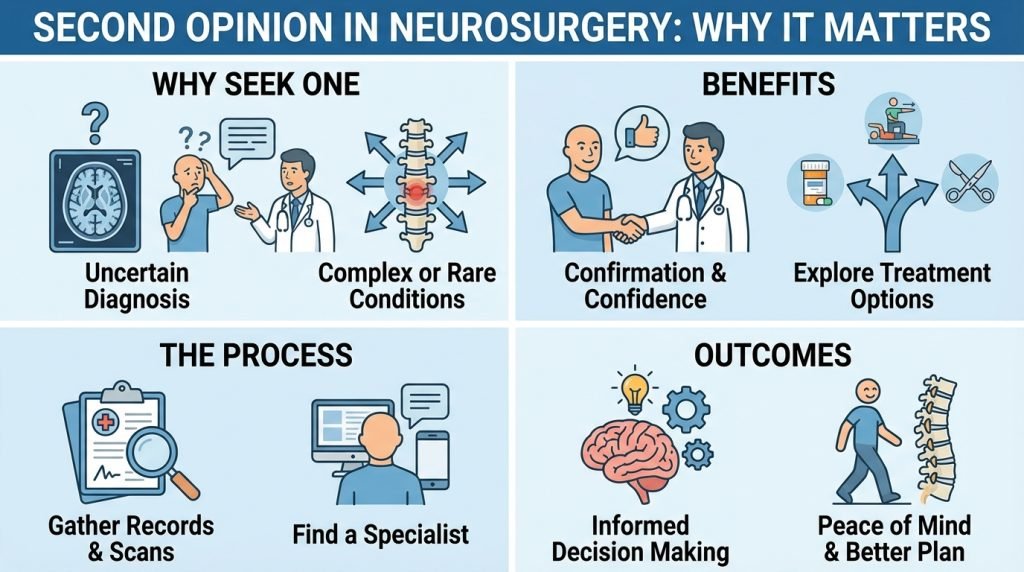
Second Opinion in Neurosurgery: Why It Matters
Receiving a diagnosis that requires neurosurgery is a life-altering moment. Whether it involves the brain, the spinal cord, or the delicate network of nerves that power your body, the stakes are undeniably high. In such moments, many patients feel a sense of urgency to act immediately. However, one of the most powerful tools a patient has in their healthcare arsenal is the second opinion.
Seeking a second opinion in neurosurgery is not about doubting your doctor’s competence; it is about ensuring that the proposed path is the safest, most effective, and most advanced option available.
The Myth of the “Offended Surgeon”
One of the primary reasons patients hesitate to seek a second opinion is the fear of offending their current surgeon. It is important to understand that reputable neurosurgeons welcome second opinions.
Neurosurgery is an incredibly complex and rapidly evolving field. No single surgeon can be an expert in every emerging technique. Professional surgeons view second opinions as a standard part of the medical process—one that promotes patient safety and confirms surgical necessity. If a surgeon discourages you from seeking another perspective, that may actually be a “red flag” in itself.
Why a Second Opinion is Critical in Neurosurgery
Neurosurgical cases are rarely “black and white.” Different surgeons may have different philosophies, levels of experience, and access to different technologies.
1. Confirming the Accuracy of the Diagnosis
Studies suggest that medical misdiagnosis or “diagnostic variation” occurs more frequently than we realize. In neurosurgery, a second set of eyes on an MRI or CT scan can reveal nuances that were missed. A second neuroradiologist or neurosurgeon might identify a specific type of tumor or a subtle spinal instability that changes the entire treatment plan.
2. Exploring Minimally Invasive Alternatives
Neurosurgery is moving toward “less is more.” Where one surgeon might recommend a traditional open surgery with a large incision and long recovery time, another—specializing in minimally invasive neurosurgery—might be able to achieve the same result through a tiny “keyhole” incision or an endoscopic approach. A second opinion allows you to discover if you are a candidate for these advanced, lower-risk techniques.
3. Evaluating Surgical Necessity
“Do I really need surgery?” This is the most important question a patient can ask. In the realm of spine surgery, in particular, many conditions can be managed with conservative treatments like specialized physical therapy, injections, or pain management. A second opinion can help determine if surgery is the only option or merely one option.
4. Accessing Subspecialty Expertise
The brain and spine are vast territories. While many neurosurgeons are generalists, others sub-specialize in niche areas such as:
- Cerebrovascular surgery (Aneurysms, AVMs)
- Neuro-oncology (Complex brain tumors)
- Functional neurosurgery (Parkinson’s, Epilepsy)
- Complex spine deformity (Scoliosis)
If your diagnosis is rare or complex, you want a second opinion from someone who performs that specific procedure hundreds of times a year.
When You Should Absolutely Seek a Second Opinion
While a second opinion is always a good idea for elective procedures, it becomes essential in the following scenarios:
- The surgery is high-risk: If the procedure carries a significant risk of neurological deficit or paralysis.
- The diagnosis is unclear: If your symptoms do not perfectly match your imaging results.
- You are told the condition is “inoperable”: One surgeon’s “inoperable” may be another surgeon’s specialty. Advances in robotic-assisted surgery and navigation have made previously “impossible” surgeries feasible.
- The surgeon lacks specific experience: If your surgeon has only performed the proposed procedure a handful of times.
- You don’t feel a “connection”: Trust is a vital component of the healing process. If you don’t feel heard or comfortable, find a surgeon who inspires confidence.
How to Prepare for Your Second Consultation
To get the most value out of a second opinion, you must be prepared. The goal is not to have the second doctor repeat what the first one said, but to provide a fresh, independent analysis.
Gather Your “Digital Portfolio”
Do not rely on the new office to track down your records. Bring a physical folder or a digital drive containing:
- Original Imaging: The actual CD or digital access to your MRI, CT, and PET scans (not just the written report).
- Pathology Reports: If a biopsy has already been performed.
- Current Medications: A full list of everything you are taking.
- Treatment History: What has already been tried (physical therapy, medications, etc.)?
Key Questions to Ask the Second Neurosurgeon
- What is your specific diagnosis of my condition?
- What are the risks if I choose not to have surgery right now?
- Are there minimally invasive or non-surgical alternatives I should consider?
- How many of these specific procedures do you perform annually?
- What is your personal complication rate for this surgery?
- If I were your family member, is this the path you would recommend?
The Rise of Remote/Online Second Opinions
In the past, getting a second opinion meant traveling long distances to major academic medical centers. Today, many of the world’s leading institutions (such as the Mayo Clinic, Cleveland Clinic, or Johns Hopkins) offer Remote Neurosurgical Second Opinions.
Through secure portals, you can upload your imaging and records. A world-class specialist will review your case and provide a comprehensive written report. This is an excellent option for patients who live in rural areas or whose mobility is limited by their condition.
Insurance and Logistics
A common concern is whether insurance will cover a second opinion. Most insurance plans, including Medicare, cover second opinions for medically necessary surgery. In some cases, insurers actually require a second opinion before they will authorize a high-cost spinal procedure.
Always call your provider beforehand to verify:
- If the consultant is “In-Network.”
- If a referral from your primary care physician is required.

