
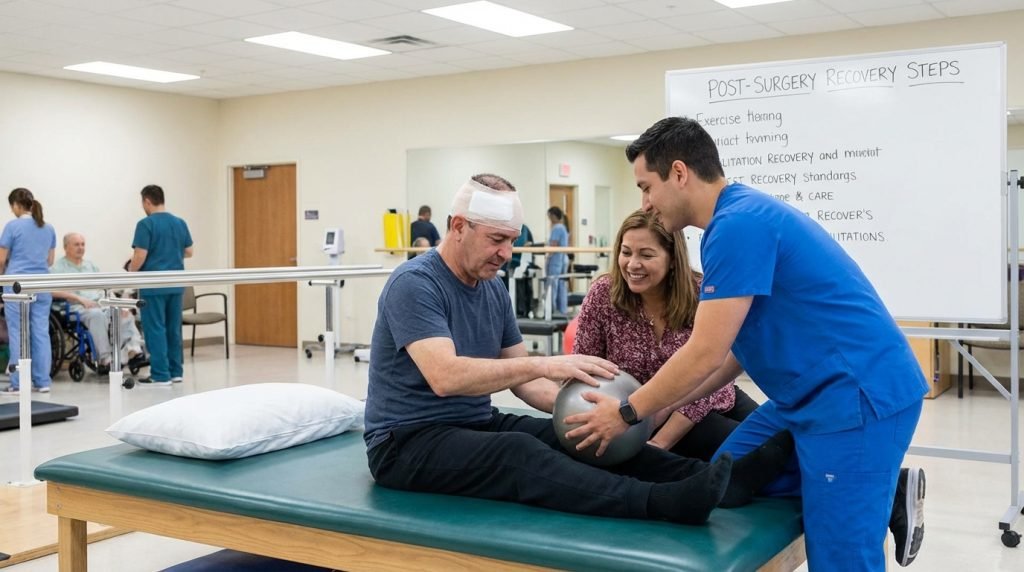
Brain Tumor Rehabilitation: What to Expect After Surgery
Undergoing surgery to remove a brain tumor is a monumental step toward health, but the procedure itself is often just the beginning of the journey. For many patients, the real work starts in the days and weeks following the operation. Brain tumor rehabilitation is a specialized, multi-disciplinary process designed to help patients regain lost functions, improve their quality of life, and adapt to any permanent neurological changes.
Whether you are a patient or a caregiver, understanding the recovery roadmap is essential for managing expectations and staying motivated.
Why is Rehabilitation Necessary After Brain Surgery?
The brain controls every aspect of human function—from the way we move our limbs to how we process emotions and language. Even the most successful surgery can temporarily disrupt these pathways due to inflammation, the removal of tissue, or the pressure changes within the skull.
Neuroplasticity, the brain’s remarkable ability to reorganize itself by forming new neural connections, is the cornerstone of rehabilitation. Through targeted exercises, rehab “teaches” the brain how to function again, either by repairing damaged pathways or finding new routes to execute tasks.
The Rehabilitation Team: Who Will You Work With?
Recovery is rarely a solo effort. A comprehensive neuro-rehabilitation team typically includes:
- Physiatrists: Doctors specializing in physical medicine and rehabilitation.
- Physical Therapists (PT): Focus on mobility, balance, and gross motor skills.
- Occupational Therapists (OT): Help patients regain independence in “activities of daily living” (ADLs), such as dressing, eating, and bathing.
- Speech-Language Pathologists (SLP): Address issues with swallowing (dysphagia), speech, and cognitive-communication.
- Neuropsychologists: Help manage the emotional and cognitive shifts that often follow brain surgery.
The Core Pillars of Brain Tumor Rehabilitation
1. Physical Therapy (Restoring Mobility)
The primary goal of PT is to get the patient moving safely. Depending on the tumor’s location, surgery may result in weakness on one side of the body (hemiparesis), lack of coordination (ataxia), or vertigo.
- Gait Training: Learning to walk again, often starting with a walker or parallel bars.
- Core Strengthening: Improving stability to prevent falls.
- Proprioception Exercises: Helping the brain understand where the body is in space.
2. Occupational Therapy (Regaining Independence)
OT is where “real life” happens. Occupational therapists evaluate the patient’s ability to perform complex tasks.
- Fine Motor Skills: Practicing buttoning a shirt or using a keyboard.
- Adaptive Equipment: Learning to use specialized tools like reachers or shower chairs.
- Visual-Spatial Training: Helping patients who may have “neglect” or vision loss following surgery.
3. Speech and Cognitive Therapy
Brain tumors can affect the “Broca’s” or “Wernicke’s” areas, leading to difficulty speaking or understanding language (aphasia).
- Cognitive Rehabilitation: Focusing on memory, attention span, and executive functions (like planning and organizing).
- Swallowing Therapy: Ensuring the patient can eat and drink without the risk of aspiration pneumonia.
The Brain Surgery Recovery Timeline: What to Expect
Recovery is not a linear process. It often follows a pattern of “two steps forward, one step back.” Here is a general timeline of what the rehabilitation journey looks like.
Phase 1: The Acute Phase (Days 1–7)
Immediately following surgery, the focus is on stability. Patients are monitored in the ICU or a specialized neuro-ward.
- Early Mobilization: Doctors will try to get you sitting up or standing as soon as 24 hours after surgery to prevent blood clots.
- Assessment: The rehab team will perform initial evaluations to determine the level of assistance needed.
Phase 2: Sub-Acute Rehabilitation (Weeks 1–6)
Once medically stable, the patient may move to an Inpatient Rehabilitation Facility (IRF).
- Intensity: Patients typically undergo 3 hours of therapy per day, five days a week.
- Goal: The focus is on achieving enough independence to return home safely.
Phase 3: Outpatient and Home-Based Care (Months 2–6+)
This is the longest phase of recovery. The patient lives at home but visits a clinic for therapy.
- Neuroplasticity at Work: This is where the most significant long-term gains in strength and cognition happen.
- Community Re-entry: Focus shifts to returning to work, driving (if cleared), and social activities.
Managing Common Post-Surgical Challenges
1. Post-Surgical Fatigue
Neuro-fatigue is different from normal tiredness. It is an overwhelming sense of exhaustion that isn’t always fixed by sleep.
- Strategy: Implement “Pacing.” Break tasks into small chunks and schedule “brain rests”—periods of silence with no screens or stimulation.
2. Emotional and Mood Changes
The “emotional brain” (limbic system) can be affected by surgery, leading to irritability, depression, or anxiety.
- Strategy: Seek support groups or counseling. Caregivers should be aware that personality changes are often a biological result of the surgery, not a choice by the patient.
3. Seizure Management
The risk of seizures is common after brain surgery due to scarring or brain irritability.
- Strategy: Strict adherence to anti-epileptic drugs (AEDs) and avoiding triggers like sleep deprivation or flashing lights.
Creating a Safe Home Environment
Before a patient returns home, a “home assessment” is crucial. To ensure safety, consider the following:
- Remove Trip Hazards: Get rid of throw rugs and clear electrical cords from walkways.
- Lighting: Use nightlights in hallways and bathrooms.
- Bathroom Safety: Install grab bars and non-slip mats in the shower.
- Organization: Keep essential items (medications, phone, water) within arm’s reach of the patient’s favorite chair.

