Brain Strokes: Prevention, Recognition, and Recovery
A stroke is a medical emergency that occurs when the blood supply to part of the brain is interrupted or reduced, preventing brain tissue from getting oxygen and nutrients. Within minutes, brain cells begin to die. This is why neurologists often use the phrase “Time is Brain.”
Understanding how to prevent a stroke, how to recognize one the moment it happens, and what the path to recovery looks like can save a life and significantly reduce long-term disability.
The Three Main Types of Stroke
To understand prevention and treatment, one must first understand the different ways a stroke can occur.
1. Ischemic Stroke (The Blockage)
Accounting for approximately 87% of all strokes, an ischemic stroke occurs when a blood clot blocks or narrows an artery leading to the brain. This is often caused by fatty deposits (plaque) building up in the arteries or blood clots that travel from the heart (often due to Atrial Fibrillation).
2. Hemorrhagic Stroke (The Bleed)
A hemorrhagic stroke occurs when a blood vessel in the brain leaks or ruptures. These are often more “explosive” and can be caused by uncontrolled high blood pressure, over-treatment with blood thinners, or brain aneurysms.
3. Transient Ischemic Attack (TIA)
Often called a “mini-stroke,” a TIA is a temporary blockage of blood flow to the brain. While it doesn’t cause permanent damage, it is a medical emergency because it serves as a “warning stroke.” Statistics show that about 1 in 3 people who have a TIA will eventually have a major stroke.
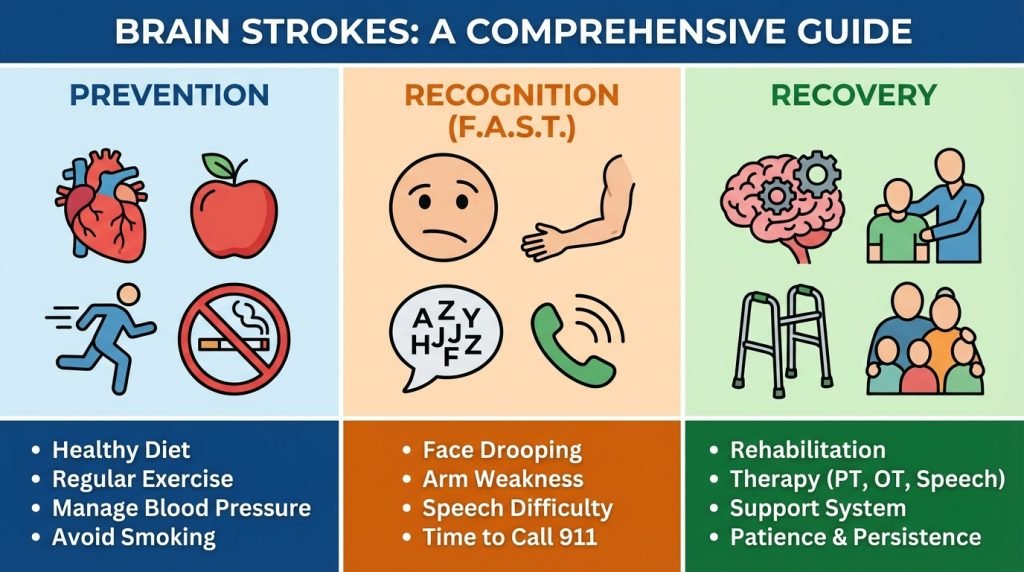
Recognition: The “BE FAST” Method
When a stroke occurs, every second counts. The sooner treatment begins, the more brain tissue can be saved. The medical community uses the BE FAST acronym to help the public identify symptoms instantly.
- B – Balance: Is the person experiencing sudden dizziness, loss of coordination, or trouble walking?
- E – Eyes: Is there sudden blurred vision, double vision, or loss of vision in one or both eyes?
- F – Face: Ask the person to smile. Does one side of the face droop?
- A – Arms: Ask the person to raise both arms. Does one arm drift downward?
- S – Speech: Ask the person to repeat a simple phrase. Is their speech slurred or strange?
- T – Time: If you observe any of these signs, call 911 immediately. Do not drive to the hospital yourself; paramedics can begin life-saving treatment in the ambulance.
Secondary Symptoms: Sudden severe headache with no known cause (“the worst headache of your life”), sudden confusion, or numbness on one side of the body.
Prevention: Reducing Your Risk
The most encouraging statistic in neurology is that up to 80% of strokes are preventable through lifestyle changes and medical management.
Manage High Blood Pressure (Hypertension)
Hypertension is the leading cause of stroke. High pressure weakens the arteries over time, making them more likely to clog or burst. Monitoring your blood pressure and keeping it below 120/80 mmHg is the single most effective prevention strategy.
Control Heart Health (Atrial Fibrillation)
Atrial fibrillation (Afib) is an irregular heartbeat that can cause blood to pool in the heart, forming clots that can travel to the brain. If you feel palpitations or an irregular pulse, consult a cardiologist.
Lifestyle Modifications
- Quit Smoking: Smoking doubles the risk of ischemic stroke and increases the risk of hemorrhage by four times.
- Dietary Changes: Adopt the Mediterranean Diet, which is high in olive oil, fruits, vegetables, and lean proteins, and low in sodium and saturated fats.
- Regular Exercise: Aim for at least 150 minutes of moderate-intensity aerobic activity per week to improve vascular health.
- Manage Diabetes: High blood sugar levels damage blood vessels over time, making clot formation more likely.
Modern Treatment: Intervening in the Crisis
Once a patient arrives at the hospital, the goal is to restore blood flow (for ischemic) or stop the bleeding (for hemorrhagic).
- tPA (Tissue Plasminogen Activator): This “clot-busting” drug can be administered intravenously. To be effective, it must usually be given within 3 to 4.5 hours of the onset of symptoms.
- Mechanical Thrombectomy: A revolutionary procedure where a neurosurgeon threads a catheter through an artery to physically remove the clot from the brain. This can sometimes be performed up to 24 hours after symptoms begin.
- Surgical Intervention: For hemorrhagic strokes, a surgeon may place a clip on an aneurysm or perform a craniotomy to relieve pressure on the brain.
The Recovery Journey: Reclaiming Function
Recovery from a stroke is not a straight line; it is a marathon. The brain has a remarkable ability called neuroplasticity—the ability to rewire itself and form new neural connections to compensate for damaged areas.
The Recovery Timeline
- The First 24–72 Hours: Focus is on medical stabilization and preventing a second stroke.
- Weeks 1–12: This is the “golden window” of recovery where neuroplasticity is at its peak. Intensive therapy during this time yields the best results.
- 6 Months and Beyond: Recovery continues, though it may slow down. Many survivors continue to make gains years after their stroke.
Types of Rehabilitation
- Physical Therapy (PT): Focuses on regaining motor skills, balance, and the ability to walk.
- Occupational Therapy (OT): Helps survivors relearn “Activities of Daily Living” (ADLs) such as dressing, bathing, and eating.
- Speech-Language Pathology (SLP): Essential for those with aphasia (difficulty speaking or understanding language) or swallowing disorders (dysphagia).
The Emotional Side of Recovery
A stroke is a traumatic event for both the survivor and their family. Post-stroke depression affects approximately one-third of survivors. This is caused both by the biochemical changes in the brain and the emotional stress of disability.
Caregivers should watch for signs of withdrawal, irritability, or loss of interest. Support groups and counseling are vital components of a holistic recovery plan.

